Back
Knowledge Panel for Real Estate Brokers: Owning Your Name in a Saturated SERP
Zillow, StreetEasy, and Compass control your search result. A Knowledge Panel takes it back.

Real estate is a name business. Sellers list with the agent they trust. Buyers walk into a showing because they recognize the broker. In luxury and commercial markets especially, a sourced lead is reading a referrer's text, then immediately googling the name they were given.
The National Association of Realtors reports that 96 percent of homebuyers use the internet during their search. The percentage is even higher for high-end transactions where the buyer's agent matters. Yet the average broker SERP is a mess: a Zillow profile, a LinkedIn page, an old StreetEasy listing, and a stale Realtor.com card. None of those are owned by you. All of them frame how you look.
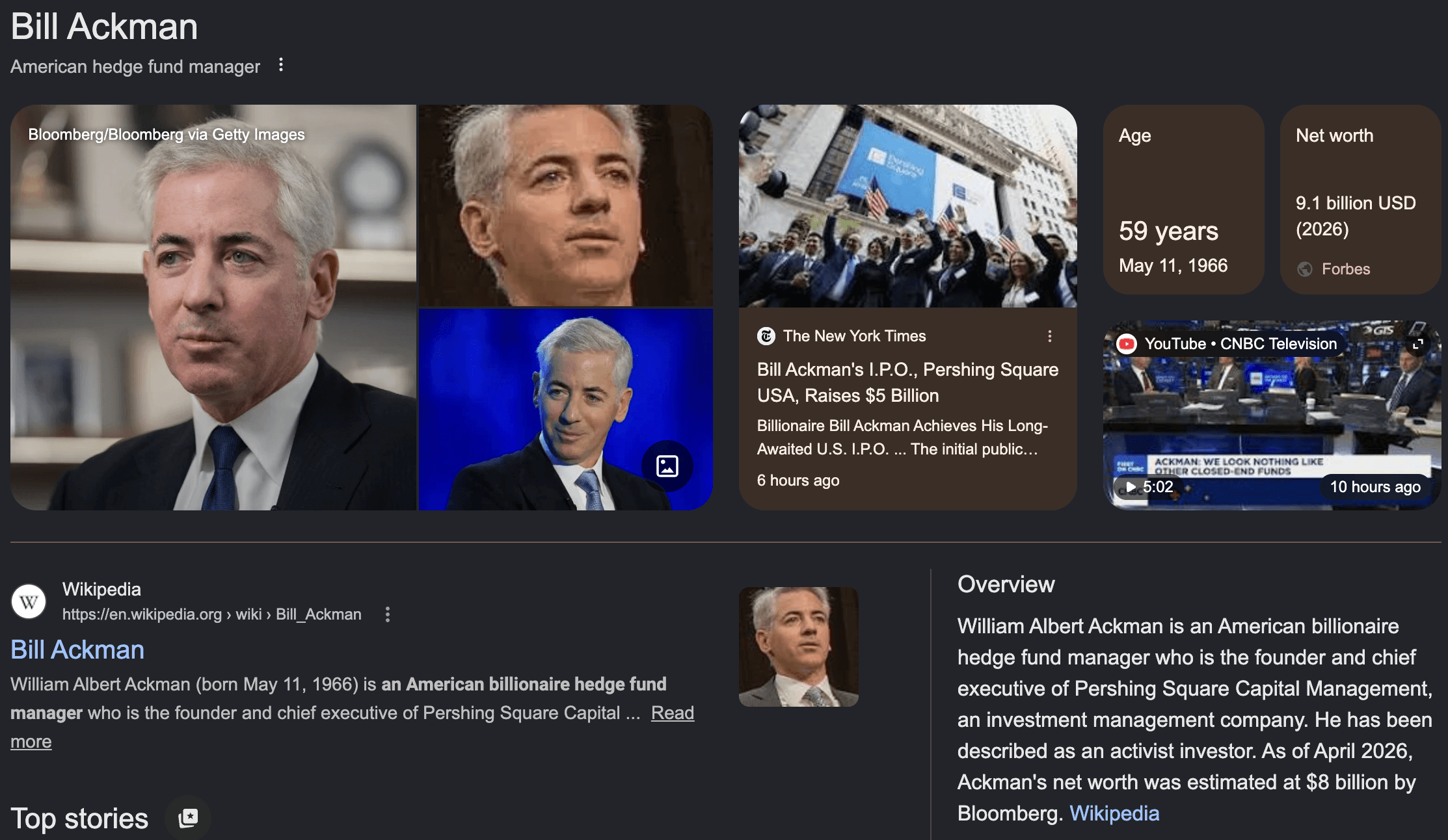
A Google Knowledge Panel is the verified card Google builds when it recognizes you as an entity. Photo, title, firm, brokerages worked at, social profiles, "people also search for." Pulled from the Knowledge Graph (500 billion facts, 5 billion entities). When the panel triggers, Zillow and StreetEasy sit underneath it. When it doesn't, they sit on top.
Where brokers lose the SERP
1. Platform dominance. Zillow, StreetEasy, Compass agent pages, and Realtor.com profiles rank above everything else. The first impression is dictated by a third-party platform you don't control.
2. Brokerage shuffle. Brokers move firms. Old Compass, Corcoran, or Douglas Elliman profiles linger in the index for years. Your search result still shows your last firm three years after you left.
3. No personal entity. The platforms above are page-level rankings, not entity-level recognition. Google doesn't know you as a person, only as a row in a brokerage database. The panel never triggers.
In a market where personal brand is the differentiator, that's expensive.
What a panel does for a broker
- Verified card with photo, current firm, and social handles. Platforms drop below it.
- Brokerage transitions update cleanly. The panel reflects your current firm, not the one you left.
- "People also search for" places you alongside peers. In luxury markets, that's branding. For commercial brokers, deal-flow positioning.
- Composite queries ("[your name] luxury Manhattan," "[your name] Aspen broker") return panel-led results.
Compounds with the work you're already doing on Instagram, YouTube, and your personal site.
How Lindy builds it
We audit your confidence score using the Knowledge Graph API. We then engineer the missing signals: home-base structured data, entity consolidation across MLS, brokerage profiles, LinkedIn, social, and press.
- Stage 1 panel in 15 to 20 business days.
- Stage 2 panel within 2 to 2.5 months.
- Common-name brokers (a "Mike Smith real estate" SERP) extend to 3 to 4 months.
You become the verified panel manager. Lifetime optimization covers brokerage moves, market expansion, and any item inside the panel that needs adjusting later.
When this matters most
Top-of-team brokers building toward a personal brand. Agents transitioning between major brokerages. Principals at boutique shops. Commercial brokers competing on relationship rather than platform inventory. Broker-team leaders whose name carries the team's pipeline.
FAQ
Q: Will this affect my Zillow or StreetEasy ratings?
No. Those platforms operate independently. Reviews and listings stay intact. The panel sits above them.
Q: I'm at Compass / Corcoran / SERHANT / Douglas Elliman. Will my brokerage care?
The panel is your personal entity card. It complements brokerage marketing rather than replacing it. We've built panels for principals across all major firms.
Q: What if I switch brokerages?
We update the panel under lifetime optimization. The card always reflects your current firm.
Q: My name is common and the SERP is contested. Can you still do it?
Yes. Variant strategy plus corroboration across MLS, LinkedIn, brokerage profiles, and press. Longer timeline, same scope.

Abhay Jain

Founder
Latest posts
Discover other pieces of writing in our blog