Back
Knowledge Panel for Founders and CEOs: Why a Verified Google Card Beats a Personal Brand Push
Diligence starts on Google. If your panel doesn't trigger, your press doesn't compound.
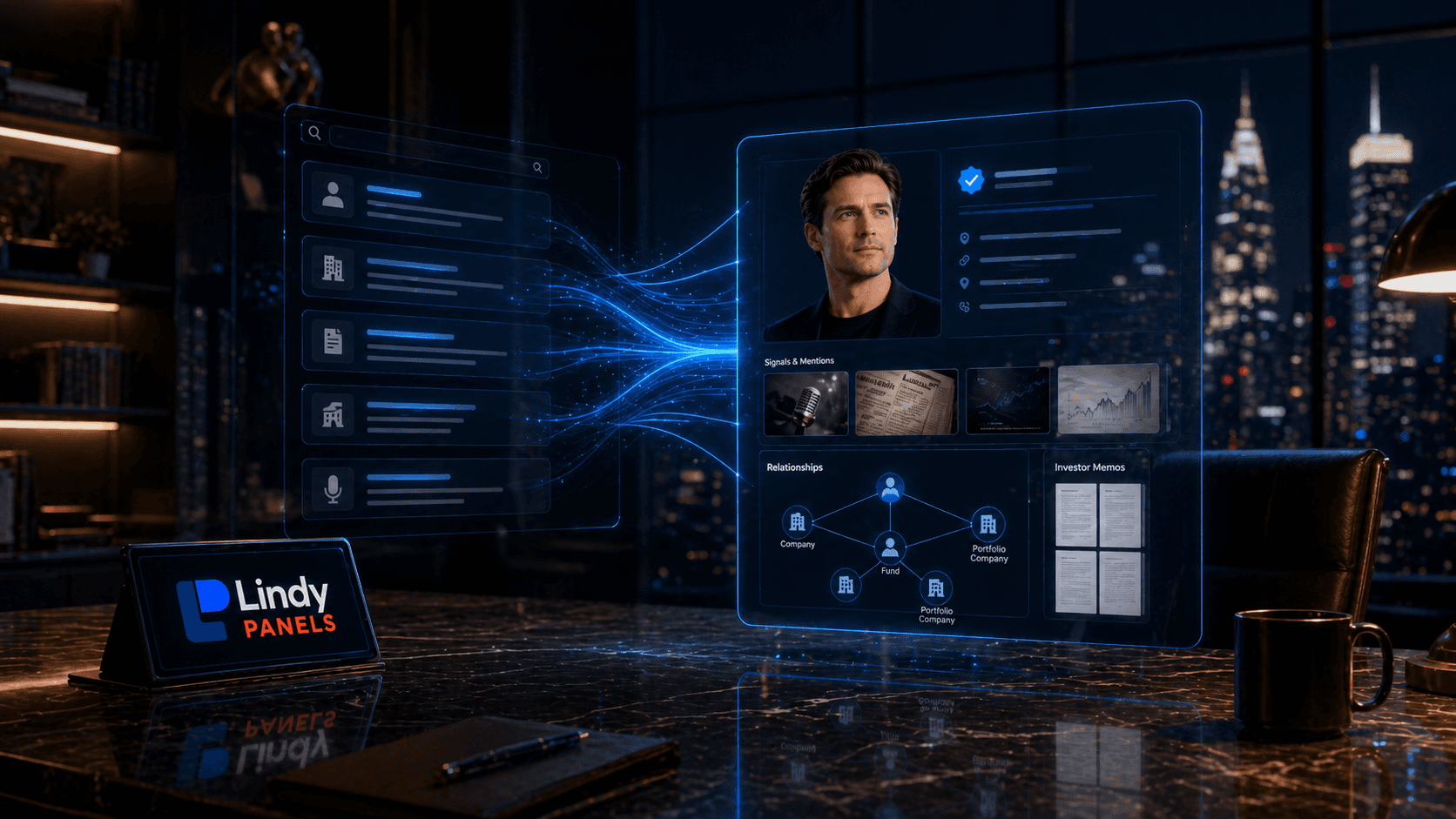
Investors do diligence by googling the founder. Tier-one journalists open every story by searching the source's name. Strategic partners compare your panel to your competitor's before the first meeting. Senior recruits screen leadership before they take the call. In each case, the Google search result is the credibility document.
The Edelman Trust Barometer has tracked CEO trust as a primary driver of company trust for the last decade. PR firms have responded by pushing thought leadership, podcasts, and ghost-bylined op-eds. The push is correct; the surface is incomplete. All that earned media compounds only if Google understands you as the entity it's all attributed to. Without that, the press hits sit in a flat list of links instead of consolidating into authority.
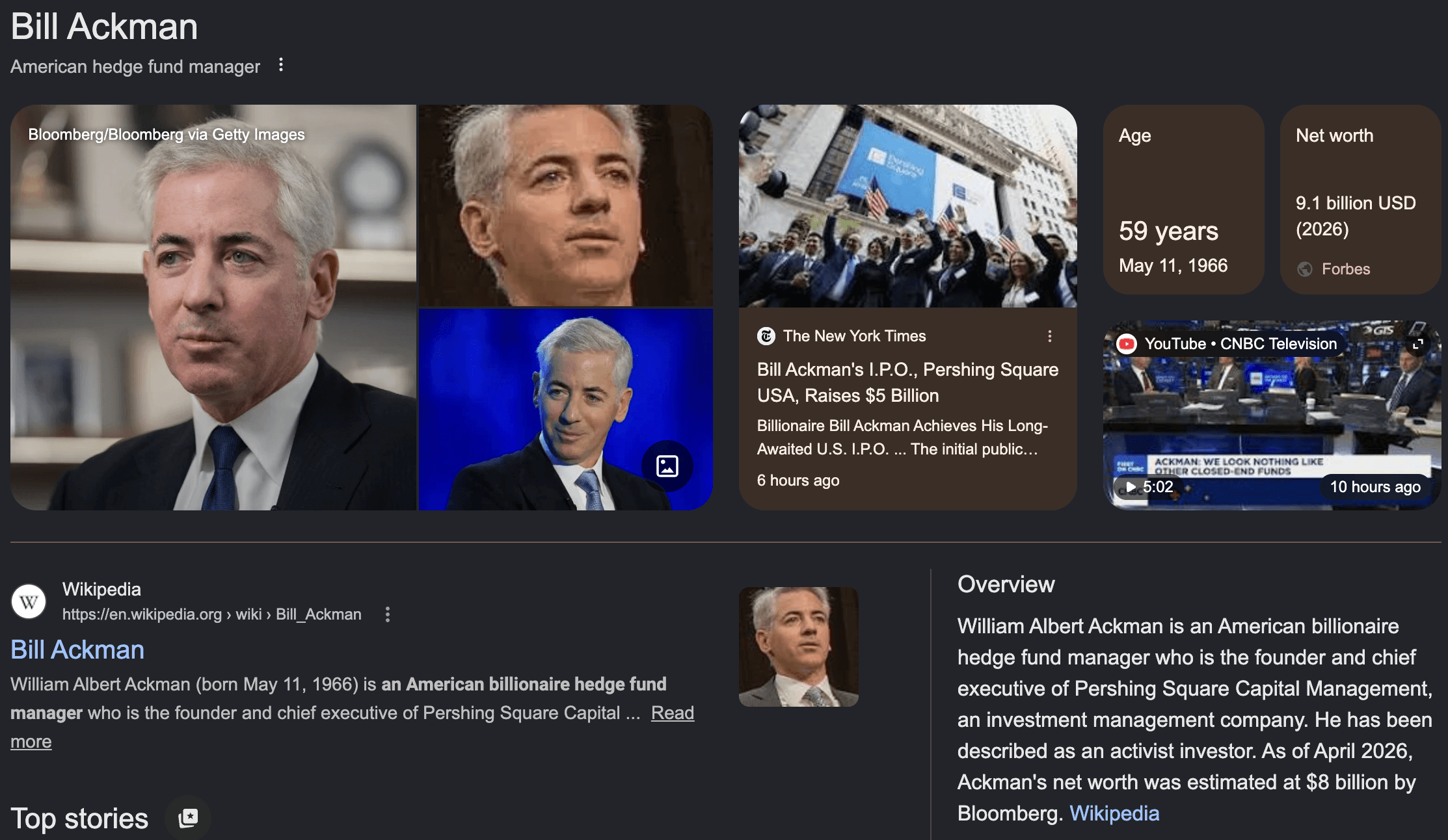
A Google Knowledge Panel is the rich card on the right side of search. Photo, title, company, education, "people also search for," key social profiles. Pulled from Google's Knowledge Graph (500 billion facts across 5 billion entities). When Google decides you are a verifiable entity, the panel appears. When it doesn't, the press hits, the podcast appearances, and the LinkedIn presence still exist, but they don't compound into a single recognizable entity.
What founders typically lose on the SERP
1. Press-rich, panel-less. The founder has been in TechCrunch, Forbes, and a major podcast, but Google still doesn't trigger a panel. The publications haven't been linked into a coherent entity stack.
2. Common-name collision. "Ryan Coyne," "Alan Johnson," "John Patel" share their SERP with senators, athletes, and other founders. The press goes to the wrong person in Google's eye.
3. Multi-entity drag. Solo founder also runs a fund, advises three companies, sits on two boards. Without consolidation, Google sees four loose entities and triggers panels for none.
Each costs you the diligence step. Investors and partners read your search result the way you read a one-pager. Incoherent one-pager, no second meeting.
What changes once your panel is live
- Verified card. Title, company, education, key links. Press hits cluster cleanly under the entity.
- "People also search for" surfaces you alongside peers. Repeat-founder track record reinforces visually.
- Multi-entity stacks (founder + fund + portfolio companies) consolidate into one identity graph.
- Disambiguation locks in. Common-name conflicts resolve in your favor with a name-variant strategy.
The panel doesn't replace PR, IR, or LinkedIn. It frames how all of them get read.
How Lindy builds it
Confidence score audit against the Knowledge Graph API. Then the entity stack: home-base structured data, citation graph reinforcement, social profile consolidation, schema markup, and authority press alignment.
- Stage 1 panel in 15 to 20 business days.
- Stage 2 panel within 2 to 2.5 months.
- Disambiguation-heavy cases (common name, competing entity, ORCID rival) extend to 3 to 4 months.
For founders running multiple entities (you, your company, your fund), parallel builds run concurrently and bundle. You become the verified manager. Lifetime optimization covers role changes, company pivots, and ongoing press alignment.
When this is worth doing
You raise capital. You sell B2B at the executive level. You court press. You recruit senior leaders. You sit at the center of a multi-entity stack (founder + fund, founder + portfolio).
It is not worth doing if your company is pre-press, pre-product, and pre-public. We will tell you that on the call.
FAQ
Q: Can you panel my company too, not just me?
Yes. Personal and company panels are separate but complementary. Multi-entity engagements run in parallel and bundle.
Q: My name is shared with someone famous. Does that kill it?
No. Variant strategy (middle initial, full middle name, distinguishing identifier) plus reinforcement across press, LinkedIn, social, and structured data. Timeline runs longer.
Q: Does this replace PR?
No. PR generates the press. The panel makes the press credit you, not someone with the same name. They compound.
Q: What happens when I sell, exit, or pivot?
Lifetime optimization covers it. Send the update; we push it through.

Abhay Jain
Founder
Latest posts
Discover other pieces of writing in our blog