Back
Knowledge Panel for Financial Advisors: Owning Your Search Result Before the First Call
What HNW prospects see when they search your name decides whether the call gets booked.
When a high-net-worth prospect gets your name from a referral, the next thing they do is google you. That single search decides whether the call gets booked or quietly ghosted. If your search result looks broken, contested, or empty, you have already lost the room before you walk in.
Industry surveys consistently show that 70 to 80 percent of investors research an advisor's online presence before engaging. For HNWIs, family offices, and institutional allocators, the rate is closer to 100 percent. The decision is made on the SERP, not on your booking page.
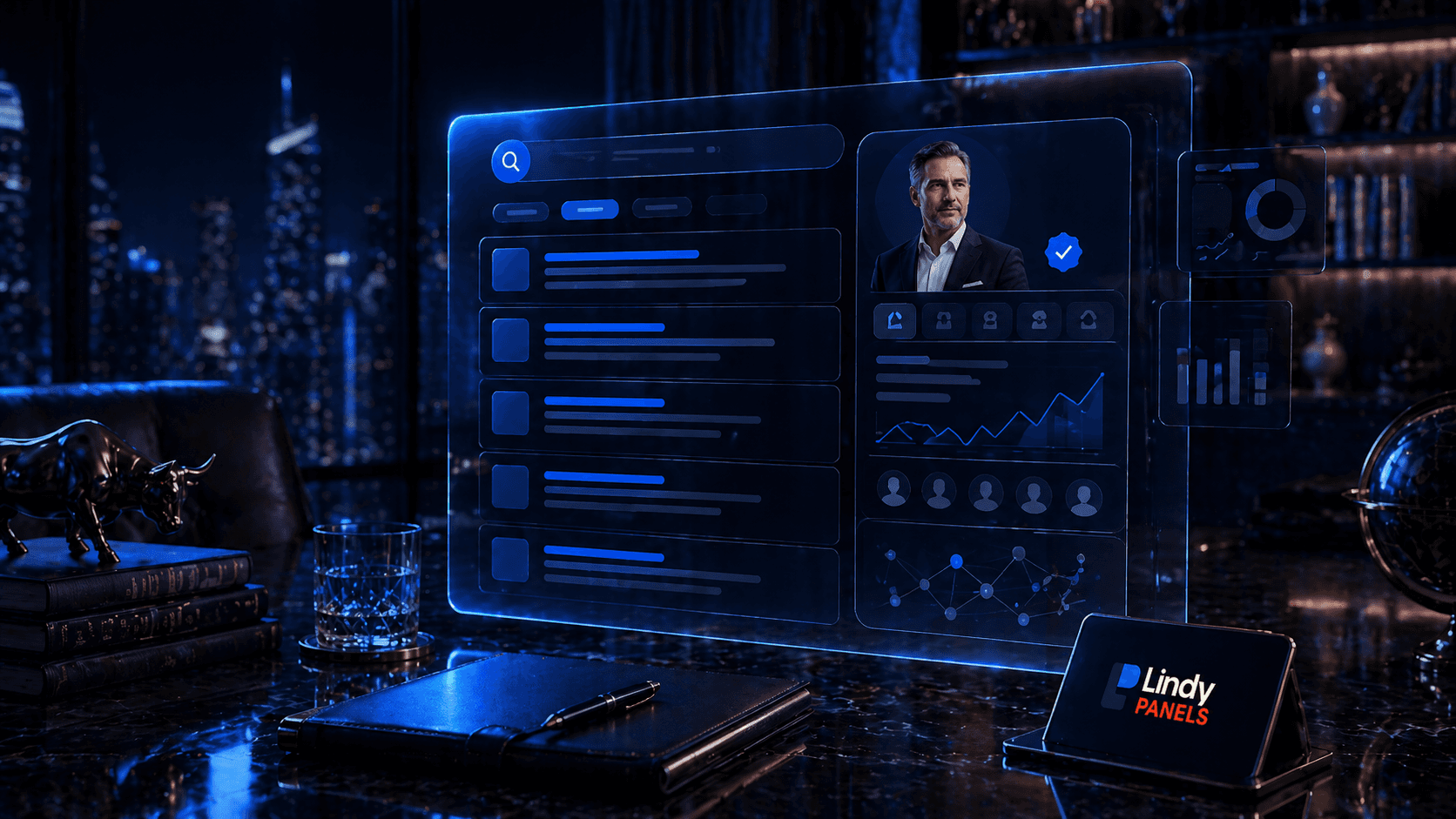
A Google Knowledge Panel is the card on the right side of the search result. Photo, professional title, firm, education, key social profiles, "people also search for." It is not a profile you fill out. It is pulled from Google's Knowledge Graph, which currently indexes more than 500 billion facts across 5 billion entities. When Google decides you are a verifiable entity, the panel appears. When it doesn't, your prospect sees a LinkedIn link, a stale firm bio, and three other people with your name.
Why financial advisors lose searches
Three patterns repeat across every financial-advisor SERP we audit:
1. Name collision. "John Miller financial advisor" lands on five different Millers, four LinkedIn pages, and a court records site. Your prospect cannot tell who you are.
2. Compliance-flat profiles. Most advisor pages on firm sites are FINRA-templated. They look identical to every other advisor at the firm, so Google sees no entity differentiation and skips the panel trigger.
3. No reinforcing footprint. A BrokerCheck page, a LinkedIn profile, and a firm bio aren't enough corroborative signals to push your confidence score above the panel-trigger threshold.
The cost is concrete: you spend on referrals, branding, and content, and the SERP undoes most of it because the prospect's first impression is fragmentation.
What changes once your panel is live
- Your name returns a single, verified, authoritative card.
- "People also search for" surfaces you alongside peers. For advisors at name-brand firms, that's a peer signal. For independents, it's a branding moat.
- Composite searches ("Jane Doe Siebert Financial," "Jane Doe wealth advisor") trigger richer panel features faster.
The panel doesn't replace your firm bio, your BrokerCheck record, or your LinkedIn. It sits above them and frames how every other surface gets read.
How Lindy builds it
We pull a confidence score from Google's Knowledge Graph API to baseline what Google currently understands about you. We then engineer the missing signals: structured data on a home base (firm bio page or personal site), entity consolidation across LinkedIn, BrokerCheck, ADV, and press, and authority reinforcement from third-party publications.
- Stage 1 panel (mini card) appears in 15 to 20 business days.
- Stage 2 panel (full feature set) appears within 2 to 2.5 months.
- Heavy disambiguation cases extend to 3 to 4 months.
You become the verified manager and can edit anytime. Lifetime optimization covers role changes, firm moves, and any unwanted item that surfaces inside the panel later.
FAQ
Q: Does a Knowledge Panel create FINRA or compliance exposure?
No. The panel surfaces neutral entity information already public elsewhere: title, education, firm, social. It makes no performance, outcome, or testimonial claims.
Q: My firm has its own brand panel. Do I still need a personal one?
Yes. Firm panels rank for the firm's name. Investors google you, the human, and the personal panel is what they see.
Q: What if my name is shared with another advisor?
We use a name variant (middle initial, full middle name) and corroborate it across LinkedIn, your firm bio, BrokerCheck, and press. Timeline runs longer; scope is the same.
Q: How long does the panel last?
Permanently, once it triggers. You own it. Lifetime optimization keeps it accurate as your role a
Abhay Jain
Founder
Latest posts
Discover other pieces of writing in our blog