Back
Back
Buy Google Knowledge Panel: Turn Your Name Into An Asset
You cannot pay Google for a panel, but you can hire a team that has already done it for 350+ entrepreneurs, executives and creators.
Dec 9, 2025
If you are looking to “Buy a Google Knowledge Panel”, you are not curious about theory. You want a specific outcome:
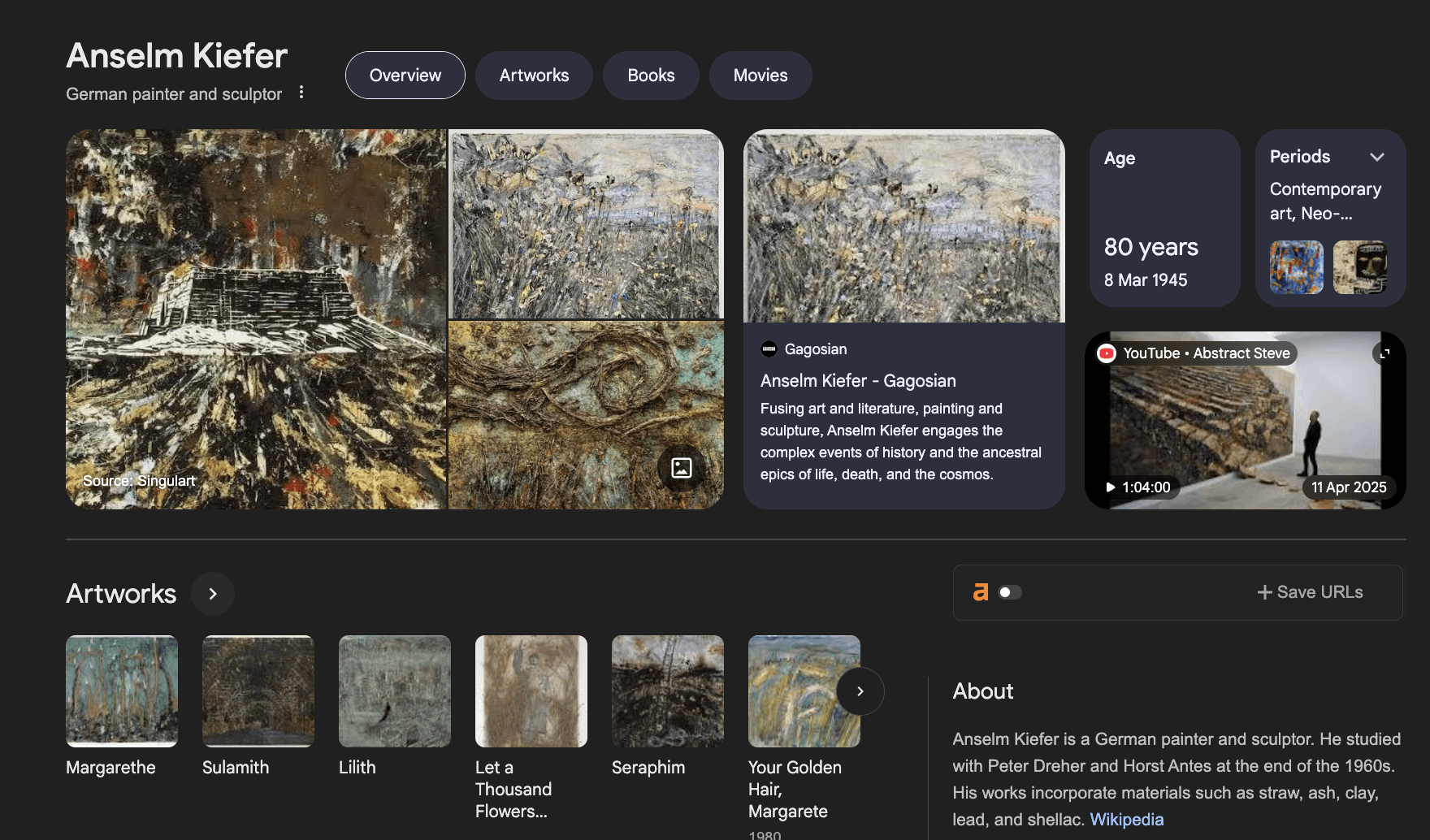
When someone types your name into Google, you want a clean, authoritative box on the right
You want that box to make you look like someone who matters, before you ever enter the room
You would rather write a check than spend six confused months trying to reverse engineer Google
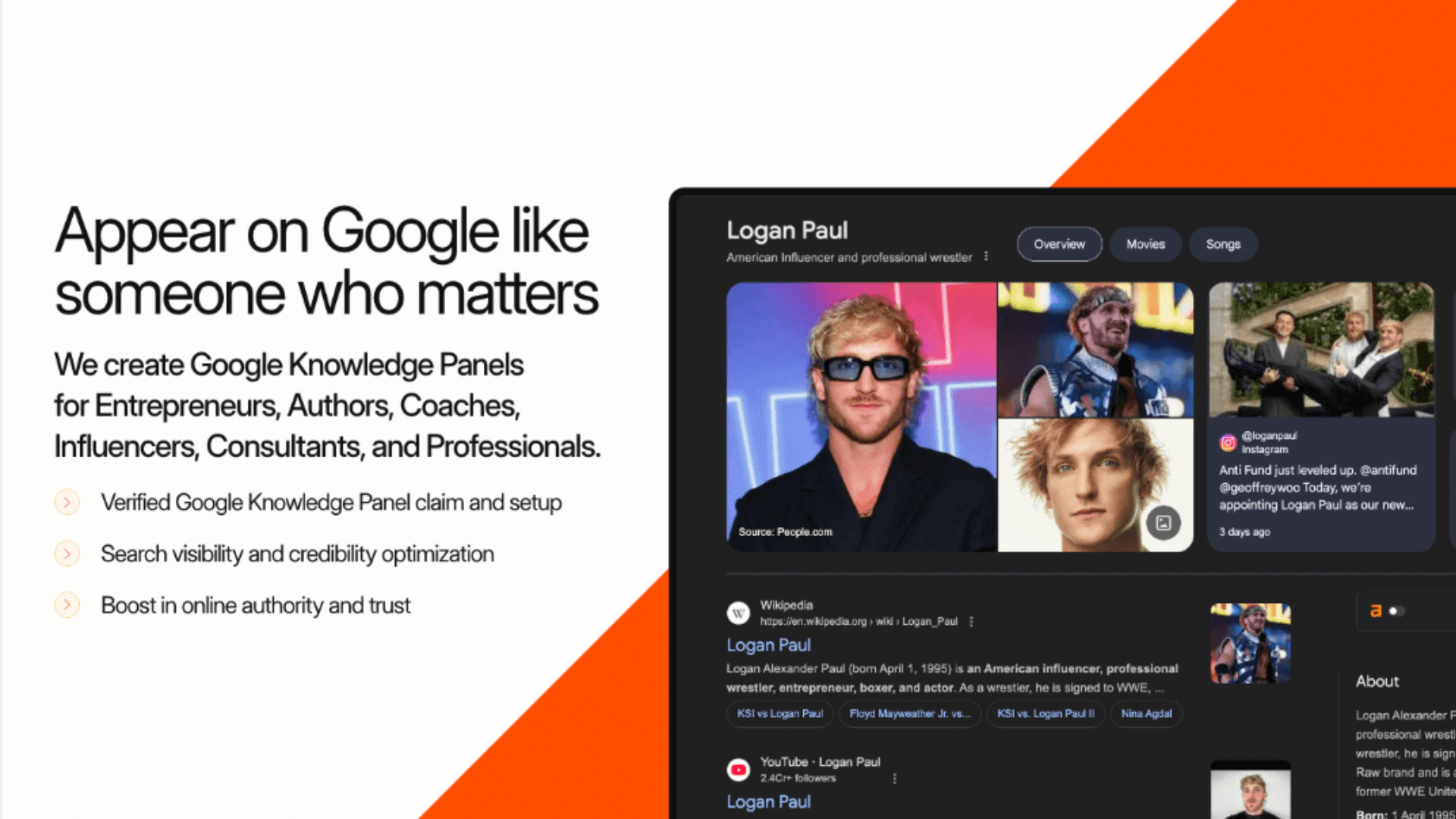
That is exactly why Lindy Panels exists. We have created Knowledge Panels for 350+ entrepreneurs, authors, coaches, influencers, consultants and professionals who already deserve to look established when people search them.
1. What “Buying a Google Knowledge Panel” actually means
Google has no product page, ad unit or dashboard button that says “Purchase Knowledge Panel”. There is no paid shortcut inside Google Ads or Search Console that flips your panel on.
Panels are generated by Google’s internal Knowledge Graph when three things are true:
You exist in the graph as a distinct entity
The web has enough consistent, high trust information about you
That information is structured and cross checked
So when you pay to “buy a Google Knowledge Panel”, what you are really buying is:
A proper entity audit of how Google currently reads your name
The cleanup and shaping of your public footprint
The technical and editorial work that makes you eligible
Ongoing maintenance so the panel survives future updates
That is the work Lindy Panels does on a fixed fee basis, currently $4997 for a full done for you engagement.
2. Why serious people want to buy a panel in the first place
Most of our clients already have results. What they do not have is a Google presence that reflects those results.
Typical situations:
A founder about to raise a round knows that every investor and candidate will search their name
A consultant is moving into larger retainers and wants prospects to feel safe wiring five figure fees
A creator is negotiating with brands and knows that managers will do a quick Google scan before approving any money
An executive is stepping into a new public role and wants search to match their real track record
In each case, the same pattern shows up:
Someone hears your name. They search it. The page they see decides how far the conversation goes.
A Knowledge Panel tilts that moment.
You look like a documented entity, not a random LinkedIn profile
Your profession, company and social links are visible at a glance
You feel like a safe choice in a shortlist of three names
That is why people try to buy the panel instead of just doing “more content”. They want the small box that quietly upgrades every future interaction.
3. The Lindy Panels method: what you actually get for your money
At Lindy Panels we treat a Knowledge Panel as the visible surface of a deeper entity. Our work is structured into four technical phases.
3.1 Assess: How does the Knowledge Graph see you right now
We start by reverse engineering your current entity footprint.
We run:
Name collision analysis
SERP sampling for your name across regions and query variants
Detection of other people or brands with the same or similar name
Checks for existing Google entity IDs (MIDs), local profiles and partial panels
Source quality mapping
Inventory of every high trust source that already mentions you
(company sites, media, conference pages, registries, major platforms)Scoring of each source on authority, structure and freshness
Eligibility and time horizon scoring
Estimate of how close you are to panel level confidence if we fix specific levers
Identification of blockers (for example: dominant name twin, messy corporate history, weak primary domain)
You get a short, technical report that explains how Google most likely resolves you as an entity today and what we need to change to cross the threshold.
3.2 Shape: Make your entity legible to machines
Once we understand the current graph, we reshape your visible footprint so it matches a single, stable entity.
Core work:
Profile canonicalisation
Standardise name, role, company and location across LinkedIn, X, Instagram, Crunchbase, company bios and other key profiles
Remove or neutralise duplicate and legacy profiles that leak authority or cause collisions
Authority source alignment
Ensure that at least one or two high trust, third party sources tell a clean, consistent story about who you are
Commission and place a targeted PR or profile piece where needed so your story exists in a verifiable context
Website as a reference object (optional content work)
If you want us to, we refine or create a compact, entity focused bio and about page
If you prefer to keep your site copy as is, we work around it and only make minimal structural changes needed for schema and internal linking
The goal is not volume of mentions, but coherence. After this phase, a machine should be able to read your top 10 sources and reach the same conclusion a human would about who you are.
3.3 Trigger: Connect the signals the Knowledge Graph trusts
Now we wire your ecosystem so Google can safely collapse everything into one entity and generate a panel.
Technical pieces:
Schema implementation
Add JSON LD for
Person,OrganizationorLocalBusinesson your primary domainPopulate
sameAswith a curated list of high trust profiles that we have already cleanedInclude stable identifiers like company numbers, books, podcasts or other durable anchors where relevant
Verification and ownership layer
Set up or fix Google Search Console for your domain and ensure the right accounts are verified
For companies and local brands, align Google Business Profile data and key directories with your canonical details
Graph friendly linking
Cross link your main profiles in a controlled way so the graph sees one tightly connected cluster instead of scattered nodes
Remove broken, circular or low trust links that dilute the signal
This is the phase where we stop "hoping Google figures it out" and instead present a clean, machine readable bundle of evidence that all points to the same entity.
3.4 Maintain: Claim, stabilise and evolve your panel
Once the panel appears, the work shifts from creation to governance.
We handle:
Claim and access
Guide you through the claim workflow so your Google account is recognised as the manager of the entity
Connect the appropriate profiles so your ownership is backed by the same graph we just built
Data hygiene and correction
Fix wrong or low quality images, incorrect roles, outdated organisations or broken profile links
Provide structured, source backed suggestions so edits are more likely to stick
Update resilience
Monitor your entity through major Search and Knowledge Graph updates
Advise on how to add new roles, companies or projects without breaking your existing entity alignment
The result is not just a one time panel. It is a maintained, high confidence entity that quietly improves every sale, hire, partnership and media interaction that begins with a name search.
4. What you should never buy, even if it promises a panel
Because “Buy Google Knowledge Panel” is a high intent search, it attracts some questionable offers.
Here is what we advise clients and competitors to avoid.
4.1 Secret “backdoor” access or guaranteed panels
No one outside Google can guarantee a panel. Anyone who claims:
A fixed day guarantee
Special access inside Google
A private form that regular users cannot see
is either exaggerating or doing something that will not survive real scrutiny.
We are very explicit on our own site: no one can guarantee the panel. We only guarantee the quality of the inputs and the work we do.
4.2 Undisclosed paid Wikipedia manipulation
Some vendors quietly use:
Fake or rushed Wikipedia pages
Sock puppet accounts to keep them alive
Thin citations that do not reflect real-world notability
This might work for a short while. When it fails, you inherit public deletion logs and editor discussions that will rank for your name and damage trust with both humans and algorithms.
Lindy Panels does not rely on Wikipedia manipulation. We prefer stable sources and structured data that are less volatile.
4.3 Fake reviews, fake profiles and other noise
It is easy to buy:
Hundreds of fake reviews
Dozens of template sites that repeat your name
Bots that create fake engagement
These tricks increase noise, not knowledge. Over time they make it harder, not easier, for Google to create a clean entity.
5. Who is a good fit to “buy” the Lindy Panels service
Our typical clients fall into one of three buckets:
Established professionals
You already have a track record. Revenue, team, media, conferences, books. Your Google page just has not caught up.Fast moving creators and coaches
You sell to strangers on the internet. Every new client searches you. You want that moment to feel like they are stepping into a known universe, not a gamble.Founders and executives
You are the face of a company. Investors, senior hires, partners and regulators all run your name through Google at some point in the process.
If that sounds like you and the fee is small relative to the deals you handle, then a “Google Knowledge Panel” is not a vanity spend.
6. What happens if you are not eligible yet
Not everyone is ready for a panel on day one.
Our process accounts for that:
If you are already media visible, average turnaround is about four weeks
If you have almost no coverage, we expect two to four months while we help build the minimum digital footprint you need
If Google still does not trigger a panel after we have executed, we pivot the work into higher quality search presence and PR instead of leaving you with nothing.
In other words, you are not buying a single roll of the dice. You are buying a systematic clean up of how you show up online.
7. How to move forward
If you are ready to stop thinking about this and simply want the result, the path is straightforward:
Fill out our eligibility form.
From there, our team handles Assess, Shape, Trigger and Maintain. You keep running your business while your Google presence starts to look like someone who matters.
You cannot buy a Knowledge Panel from Google. You can buy a team that treats your name search like a critical asset and does the unglamorous work that makes that panel appear and stick.
That is what Lindy Panels sells.
If you are looking to “Buy a Google Knowledge Panel”, you are not curious about theory. You want a specific outcome:
When someone types your name into Google, you want a clean, authoritative box on the right
You want that box to make you look like someone who matters, before you ever enter the room
You would rather write a check than spend six confused months trying to reverse engineer Google
That is exactly why Lindy Panels exists. We have created Knowledge Panels for 350+ entrepreneurs, authors, coaches, influencers, consultants and professionals who already deserve to look established when people search them.
1. What “Buying a Google Knowledge Panel” actually means
Google has no product page, ad unit or dashboard button that says “Purchase Knowledge Panel”. There is no paid shortcut inside Google Ads or Search Console that flips your panel on.
Panels are generated by Google’s internal Knowledge Graph when three things are true:
You exist in the graph as a distinct entity
The web has enough consistent, high trust information about you
That information is structured and cross checked
So when you pay to “buy a Google Knowledge Panel”, what you are really buying is:
A proper entity audit of how Google currently reads your name
The cleanup and shaping of your public footprint
The technical and editorial work that makes you eligible
Ongoing maintenance so the panel survives future updates
That is the work Lindy Panels does on a fixed fee basis, currently $4997 for a full done for you engagement.
2. Why serious people want to buy a panel in the first place
Most of our clients already have results. What they do not have is a Google presence that reflects those results.
Typical situations:
A founder about to raise a round knows that every investor and candidate will search their name
A consultant is moving into larger retainers and wants prospects to feel safe wiring five figure fees
A creator is negotiating with brands and knows that managers will do a quick Google scan before approving any money
An executive is stepping into a new public role and wants search to match their real track record
In each case, the same pattern shows up:
Someone hears your name. They search it. The page they see decides how far the conversation goes.
A Knowledge Panel tilts that moment.
You look like a documented entity, not a random LinkedIn profile
Your profession, company and social links are visible at a glance
You feel like a safe choice in a shortlist of three names
That is why people try to buy the panel instead of just doing “more content”. They want the small box that quietly upgrades every future interaction.
3. The Lindy Panels method: what you actually get for your money
At Lindy Panels we treat a Knowledge Panel as the visible surface of a deeper entity. Our work is structured into four technical phases.
3.1 Assess: How does the Knowledge Graph see you right now
We start by reverse engineering your current entity footprint.
We run:
Name collision analysis
SERP sampling for your name across regions and query variants
Detection of other people or brands with the same or similar name
Checks for existing Google entity IDs (MIDs), local profiles and partial panels
Source quality mapping
Inventory of every high trust source that already mentions you
(company sites, media, conference pages, registries, major platforms)Scoring of each source on authority, structure and freshness
Eligibility and time horizon scoring
Estimate of how close you are to panel level confidence if we fix specific levers
Identification of blockers (for example: dominant name twin, messy corporate history, weak primary domain)
You get a short, technical report that explains how Google most likely resolves you as an entity today and what we need to change to cross the threshold.
3.2 Shape: Make your entity legible to machines
Once we understand the current graph, we reshape your visible footprint so it matches a single, stable entity.
Core work:
Profile canonicalisation
Standardise name, role, company and location across LinkedIn, X, Instagram, Crunchbase, company bios and other key profiles
Remove or neutralise duplicate and legacy profiles that leak authority or cause collisions
Authority source alignment
Ensure that at least one or two high trust, third party sources tell a clean, consistent story about who you are
Commission and place a targeted PR or profile piece where needed so your story exists in a verifiable context
Website as a reference object (optional content work)
If you want us to, we refine or create a compact, entity focused bio and about page
If you prefer to keep your site copy as is, we work around it and only make minimal structural changes needed for schema and internal linking
The goal is not volume of mentions, but coherence. After this phase, a machine should be able to read your top 10 sources and reach the same conclusion a human would about who you are.
3.3 Trigger: Connect the signals the Knowledge Graph trusts
Now we wire your ecosystem so Google can safely collapse everything into one entity and generate a panel.
Technical pieces:
Schema implementation
Add JSON LD for
Person,OrganizationorLocalBusinesson your primary domainPopulate
sameAswith a curated list of high trust profiles that we have already cleanedInclude stable identifiers like company numbers, books, podcasts or other durable anchors where relevant
Verification and ownership layer
Set up or fix Google Search Console for your domain and ensure the right accounts are verified
For companies and local brands, align Google Business Profile data and key directories with your canonical details
Graph friendly linking
Cross link your main profiles in a controlled way so the graph sees one tightly connected cluster instead of scattered nodes
Remove broken, circular or low trust links that dilute the signal
This is the phase where we stop "hoping Google figures it out" and instead present a clean, machine readable bundle of evidence that all points to the same entity.
3.4 Maintain: Claim, stabilise and evolve your panel
Once the panel appears, the work shifts from creation to governance.
We handle:
Claim and access
Guide you through the claim workflow so your Google account is recognised as the manager of the entity
Connect the appropriate profiles so your ownership is backed by the same graph we just built
Data hygiene and correction
Fix wrong or low quality images, incorrect roles, outdated organisations or broken profile links
Provide structured, source backed suggestions so edits are more likely to stick
Update resilience
Monitor your entity through major Search and Knowledge Graph updates
Advise on how to add new roles, companies or projects without breaking your existing entity alignment
The result is not just a one time panel. It is a maintained, high confidence entity that quietly improves every sale, hire, partnership and media interaction that begins with a name search.
4. What you should never buy, even if it promises a panel
Because “Buy Google Knowledge Panel” is a high intent search, it attracts some questionable offers.
Here is what we advise clients and competitors to avoid.
4.1 Secret “backdoor” access or guaranteed panels
No one outside Google can guarantee a panel. Anyone who claims:
A fixed day guarantee
Special access inside Google
A private form that regular users cannot see
is either exaggerating or doing something that will not survive real scrutiny.
We are very explicit on our own site: no one can guarantee the panel. We only guarantee the quality of the inputs and the work we do.
4.2 Undisclosed paid Wikipedia manipulation
Some vendors quietly use:
Fake or rushed Wikipedia pages
Sock puppet accounts to keep them alive
Thin citations that do not reflect real-world notability
This might work for a short while. When it fails, you inherit public deletion logs and editor discussions that will rank for your name and damage trust with both humans and algorithms.
Lindy Panels does not rely on Wikipedia manipulation. We prefer stable sources and structured data that are less volatile.
4.3 Fake reviews, fake profiles and other noise
It is easy to buy:
Hundreds of fake reviews
Dozens of template sites that repeat your name
Bots that create fake engagement
These tricks increase noise, not knowledge. Over time they make it harder, not easier, for Google to create a clean entity.
5. Who is a good fit to “buy” the Lindy Panels service
Our typical clients fall into one of three buckets:
Established professionals
You already have a track record. Revenue, team, media, conferences, books. Your Google page just has not caught up.Fast moving creators and coaches
You sell to strangers on the internet. Every new client searches you. You want that moment to feel like they are stepping into a known universe, not a gamble.Founders and executives
You are the face of a company. Investors, senior hires, partners and regulators all run your name through Google at some point in the process.
If that sounds like you and the fee is small relative to the deals you handle, then a “Google Knowledge Panel” is not a vanity spend.
6. What happens if you are not eligible yet
Not everyone is ready for a panel on day one.
Our process accounts for that:
If you are already media visible, average turnaround is about four weeks
If you have almost no coverage, we expect two to four months while we help build the minimum digital footprint you need
If Google still does not trigger a panel after we have executed, we pivot the work into higher quality search presence and PR instead of leaving you with nothing.
In other words, you are not buying a single roll of the dice. You are buying a systematic clean up of how you show up online.
7. How to move forward
If you are ready to stop thinking about this and simply want the result, the path is straightforward:
Fill out our eligibility form.
From there, our team handles Assess, Shape, Trigger and Maintain. You keep running your business while your Google presence starts to look like someone who matters.
You cannot buy a Knowledge Panel from Google. You can buy a team that treats your name search like a critical asset and does the unglamorous work that makes that panel appear and stick.
That is what Lindy Panels sells.
If you are looking to “Buy a Google Knowledge Panel”, you are not curious about theory. You want a specific outcome:
When someone types your name into Google, you want a clean, authoritative box on the right
You want that box to make you look like someone who matters, before you ever enter the room
You would rather write a check than spend six confused months trying to reverse engineer Google
That is exactly why Lindy Panels exists. We have created Knowledge Panels for 350+ entrepreneurs, authors, coaches, influencers, consultants and professionals who already deserve to look established when people search them.
1. What “Buying a Google Knowledge Panel” actually means
Google has no product page, ad unit or dashboard button that says “Purchase Knowledge Panel”. There is no paid shortcut inside Google Ads or Search Console that flips your panel on.
Panels are generated by Google’s internal Knowledge Graph when three things are true:
You exist in the graph as a distinct entity
The web has enough consistent, high trust information about you
That information is structured and cross checked
So when you pay to “buy a Google Knowledge Panel”, what you are really buying is:
A proper entity audit of how Google currently reads your name
The cleanup and shaping of your public footprint
The technical and editorial work that makes you eligible
Ongoing maintenance so the panel survives future updates
That is the work Lindy Panels does on a fixed fee basis, currently $4997 for a full done for you engagement.
2. Why serious people want to buy a panel in the first place
Most of our clients already have results. What they do not have is a Google presence that reflects those results.
Typical situations:
A founder about to raise a round knows that every investor and candidate will search their name
A consultant is moving into larger retainers and wants prospects to feel safe wiring five figure fees
A creator is negotiating with brands and knows that managers will do a quick Google scan before approving any money
An executive is stepping into a new public role and wants search to match their real track record
In each case, the same pattern shows up:
Someone hears your name. They search it. The page they see decides how far the conversation goes.
A Knowledge Panel tilts that moment.
You look like a documented entity, not a random LinkedIn profile
Your profession, company and social links are visible at a glance
You feel like a safe choice in a shortlist of three names
That is why people try to buy the panel instead of just doing “more content”. They want the small box that quietly upgrades every future interaction.
3. The Lindy Panels method: what you actually get for your money
At Lindy Panels we treat a Knowledge Panel as the visible surface of a deeper entity. Our work is structured into four technical phases.
3.1 Assess: How does the Knowledge Graph see you right now
We start by reverse engineering your current entity footprint.
We run:
Name collision analysis
SERP sampling for your name across regions and query variants
Detection of other people or brands with the same or similar name
Checks for existing Google entity IDs (MIDs), local profiles and partial panels
Source quality mapping
Inventory of every high trust source that already mentions you
(company sites, media, conference pages, registries, major platforms)Scoring of each source on authority, structure and freshness
Eligibility and time horizon scoring
Estimate of how close you are to panel level confidence if we fix specific levers
Identification of blockers (for example: dominant name twin, messy corporate history, weak primary domain)
You get a short, technical report that explains how Google most likely resolves you as an entity today and what we need to change to cross the threshold.
3.2 Shape: Make your entity legible to machines
Once we understand the current graph, we reshape your visible footprint so it matches a single, stable entity.
Core work:
Profile canonicalisation
Standardise name, role, company and location across LinkedIn, X, Instagram, Crunchbase, company bios and other key profiles
Remove or neutralise duplicate and legacy profiles that leak authority or cause collisions
Authority source alignment
Ensure that at least one or two high trust, third party sources tell a clean, consistent story about who you are
Commission and place a targeted PR or profile piece where needed so your story exists in a verifiable context
Website as a reference object (optional content work)
If you want us to, we refine or create a compact, entity focused bio and about page
If you prefer to keep your site copy as is, we work around it and only make minimal structural changes needed for schema and internal linking
The goal is not volume of mentions, but coherence. After this phase, a machine should be able to read your top 10 sources and reach the same conclusion a human would about who you are.
3.3 Trigger: Connect the signals the Knowledge Graph trusts
Now we wire your ecosystem so Google can safely collapse everything into one entity and generate a panel.
Technical pieces:
Schema implementation
Add JSON LD for
Person,OrganizationorLocalBusinesson your primary domainPopulate
sameAswith a curated list of high trust profiles that we have already cleanedInclude stable identifiers like company numbers, books, podcasts or other durable anchors where relevant
Verification and ownership layer
Set up or fix Google Search Console for your domain and ensure the right accounts are verified
For companies and local brands, align Google Business Profile data and key directories with your canonical details
Graph friendly linking
Cross link your main profiles in a controlled way so the graph sees one tightly connected cluster instead of scattered nodes
Remove broken, circular or low trust links that dilute the signal
This is the phase where we stop "hoping Google figures it out" and instead present a clean, machine readable bundle of evidence that all points to the same entity.
3.4 Maintain: Claim, stabilise and evolve your panel
Once the panel appears, the work shifts from creation to governance.
We handle:
Claim and access
Guide you through the claim workflow so your Google account is recognised as the manager of the entity
Connect the appropriate profiles so your ownership is backed by the same graph we just built
Data hygiene and correction
Fix wrong or low quality images, incorrect roles, outdated organisations or broken profile links
Provide structured, source backed suggestions so edits are more likely to stick
Update resilience
Monitor your entity through major Search and Knowledge Graph updates
Advise on how to add new roles, companies or projects without breaking your existing entity alignment
The result is not just a one time panel. It is a maintained, high confidence entity that quietly improves every sale, hire, partnership and media interaction that begins with a name search.
4. What you should never buy, even if it promises a panel
Because “Buy Google Knowledge Panel” is a high intent search, it attracts some questionable offers.
Here is what we advise clients and competitors to avoid.
4.1 Secret “backdoor” access or guaranteed panels
No one outside Google can guarantee a panel. Anyone who claims:
A fixed day guarantee
Special access inside Google
A private form that regular users cannot see
is either exaggerating or doing something that will not survive real scrutiny.
We are very explicit on our own site: no one can guarantee the panel. We only guarantee the quality of the inputs and the work we do.
4.2 Undisclosed paid Wikipedia manipulation
Some vendors quietly use:
Fake or rushed Wikipedia pages
Sock puppet accounts to keep them alive
Thin citations that do not reflect real-world notability
This might work for a short while. When it fails, you inherit public deletion logs and editor discussions that will rank for your name and damage trust with both humans and algorithms.
Lindy Panels does not rely on Wikipedia manipulation. We prefer stable sources and structured data that are less volatile.
4.3 Fake reviews, fake profiles and other noise
It is easy to buy:
Hundreds of fake reviews
Dozens of template sites that repeat your name
Bots that create fake engagement
These tricks increase noise, not knowledge. Over time they make it harder, not easier, for Google to create a clean entity.
5. Who is a good fit to “buy” the Lindy Panels service
Our typical clients fall into one of three buckets:
Established professionals
You already have a track record. Revenue, team, media, conferences, books. Your Google page just has not caught up.Fast moving creators and coaches
You sell to strangers on the internet. Every new client searches you. You want that moment to feel like they are stepping into a known universe, not a gamble.Founders and executives
You are the face of a company. Investors, senior hires, partners and regulators all run your name through Google at some point in the process.
If that sounds like you and the fee is small relative to the deals you handle, then a “Google Knowledge Panel” is not a vanity spend.
6. What happens if you are not eligible yet
Not everyone is ready for a panel on day one.
Our process accounts for that:
If you are already media visible, average turnaround is about four weeks
If you have almost no coverage, we expect two to four months while we help build the minimum digital footprint you need
If Google still does not trigger a panel after we have executed, we pivot the work into higher quality search presence and PR instead of leaving you with nothing.
In other words, you are not buying a single roll of the dice. You are buying a systematic clean up of how you show up online.
7. How to move forward
If you are ready to stop thinking about this and simply want the result, the path is straightforward:
Fill out our eligibility form.
From there, our team handles Assess, Shape, Trigger and Maintain. You keep running your business while your Google presence starts to look like someone who matters.
You cannot buy a Knowledge Panel from Google. You can buy a team that treats your name search like a critical asset and does the unglamorous work that makes that panel appear and stick.
That is what Lindy Panels sells.


Ready to look like someone who matters?
Turn your Google presence into a polished Knowledge Panel that signals credibility to clients, investors and press before you ever walk in the room.
Ready to look like someone who matters?
Turn your Google presence into a polished Knowledge Panel that signals credibility to clients, investors and press before you ever walk in the room.
Ready to look like someone who matters?
Turn your Google presence into a polished Knowledge Panel that signals credibility to clients, investors and press before you ever walk in the room.
Latest posts
Discover other pieces of writing in our blog