Back
How to Get a Google Knowledge Panel for a Person
What it takes, why it matters more now than ever, and what most people get wrong.
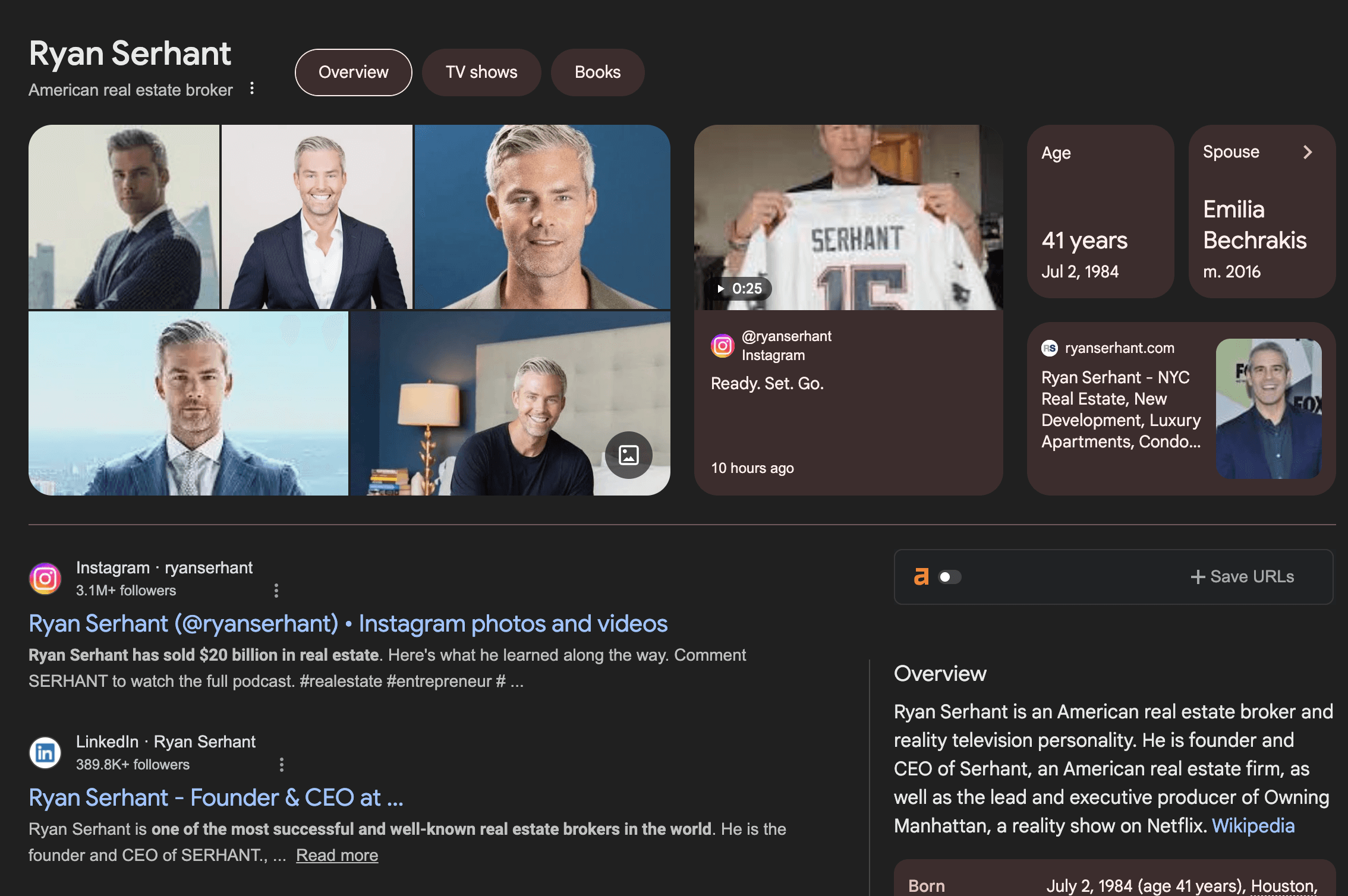
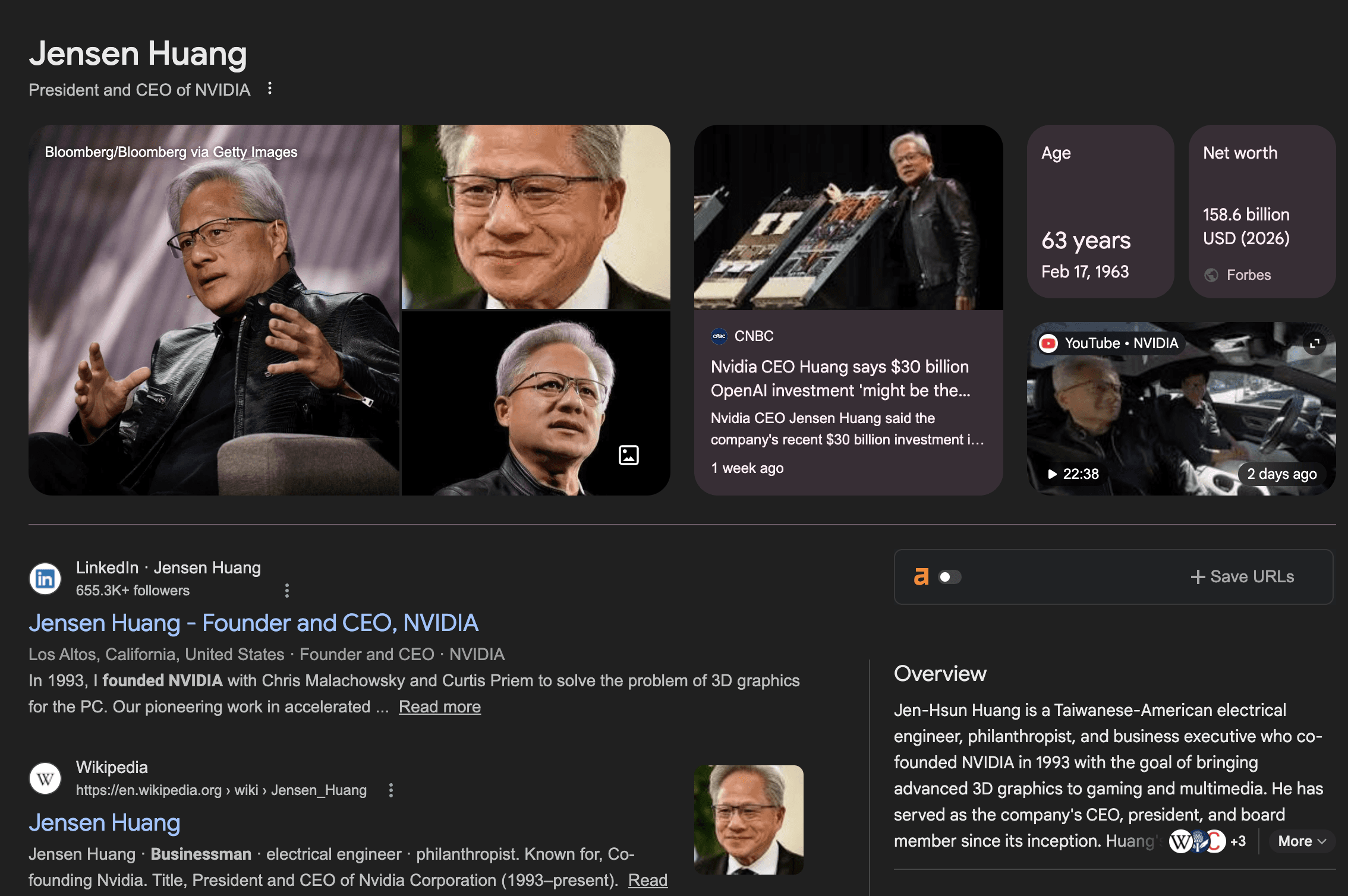
Google someone you admire. A CEO you follow. An author whose book you read. A lawyer who won a landmark case. Chances are, on the right side of the screen, there's a box with their photo, title, bio, and credentials. That's a Google Knowledge Panel.
Now Google yourself.
If there's nothing there, you're not alone. Most professionals, even highly accomplished ones, don't have a Knowledge Panel. Not because they don't qualify, but because they've never thought about it, or assumed it was reserved for household names.
It isn't.
What a Knowledge Panel Actually Is
A Knowledge Panel is Google's way of saying "we know who this person is." It pulls from the Knowledge Graph, Google's structured database of verified entities, and displays a curated summary of your identity: name, photo, title, affiliations, credentials, and related entities. It appears every time someone searches your name.
It's not a social media profile you manage. It's not a website you built. It's Google independently confirming that you are a recognised, notable entity in your space. That distinction matters more than most people realise.
Why It Matters for You Specifically
Every meaningful professional interaction starts with a Google search. A client before they sign. An investor before the meeting. A journalist before they reply to your pitch. A partner before they make the introduction. A procurement officer before they approve your firm as a vendor.
What they see in that moment decides whether the conversation moves forward or dies quietly.
Without a panel, they see a scattered page of LinkedIn results, directory listings, and whatever else Google happens to surface. Some of it's outdated. Some of it's wrong. None of it is verified.
With a panel, they see a clean, authoritative box that Google itself has curated. Your name, your face, your role, your affiliations. The silent question "is this person legit?" gets answered before they even click a link.
That's the difference between a warm first impression and no impression at all.
The AI Layer Most People Are Missing
This is the part that's changing fast. Google launched AI Mode in 2025, which generates conversational answers to queries by pulling directly from the Knowledge Graph. ChatGPT, Gemini, and Perplexity do the same thing.
When someone asks an AI tool "who is [your name]" or "tell me about [your company's] founder," the answer it generates depends partially on whether you exist as a verified entity in the Knowledge Graph. If you do, AI gives a factual, structured answer built on verified data. If you don't, AI either guesses, pulls from random directory listings, or says nothing.
This isn't hypothetical. It's happening right now, millions of times a day. And the people without Knowledge Panels are invisible to it.
What It Takes to Get One
Google's Knowledge Graph doesn't care about your follower count or how many Instagram posts you've made. It cares about three things: whether you have a clear, consistent identity across the web (entity clarity), whether independent sources confirm the facts about you (corroborative authority), and whether the technical data signals are in place for Google to parse your information (structured data).
Most established professionals already have the raw material. Media mentions, directory listings, conference bios, alumni pages, professional associations, company websites. The problem is that none of it is structured in a way Google can confidently read, and there are usually inconsistencies across sources that kill the Knowledge Graph's confidence.
This is exactly where most DIY attempts fail. The information exists, but it's scattered, inconsistent, or technically invisible to the Knowledge Graph. People spend months tweaking schema markup and editing Wikidata entries without understanding how Google connects the dots. There's no error message when it doesn't work. The panel just never appears.
What We Do Differently
At Lindy Panels, we've triggered over 350 Knowledge Panels for founders, executives, attorneys, authors, creators, and public figures across 20+ industries. The process is the same every time: we audit how Google currently reads your name, identify the gaps, build the entity signals, trigger the panel, guide you through claiming it, and then manage it on an ongoing basis.
One-time engagement. No monthly retainers. Lifetime panel management included. And a 100% delivery guarantee: if we take you on and the panel doesn't go live, you get a full refund.
We don't take on clients we can't deliver for. Before any engagement, we run a detailed eligibility assessment and tell you straight up whether a panel is achievable and what the timeline looks like. If it's not the right time, we'll say so.
If you're a founder, executive, attorney, author, or professional with an established career and a real body of work, and when someone Googles your name, what they see doesn't match who you actually are, this is worth a conversation.
Book a strategy call at Lindy Panels. We'll pull up your name, show you exactly how Google reads it today, and tell you whether a panel makes sense.

Abhay Jain

Founder and CEO
Abhay Jain is the Founder and CEO of Lindy GEO and Lindy Panels.
Most people build a following. Few build a name that outlasts them.
Claim the most valuable digital real estate on the internet and prove you’ve built something designed to stand the test of time.
Latest posts
Discover other pieces of writing in our blog