Back
Google Knowledge Panel Eligibility Criterion
The real eligibility criteria, what Google looks for, and how to know if you're ready.
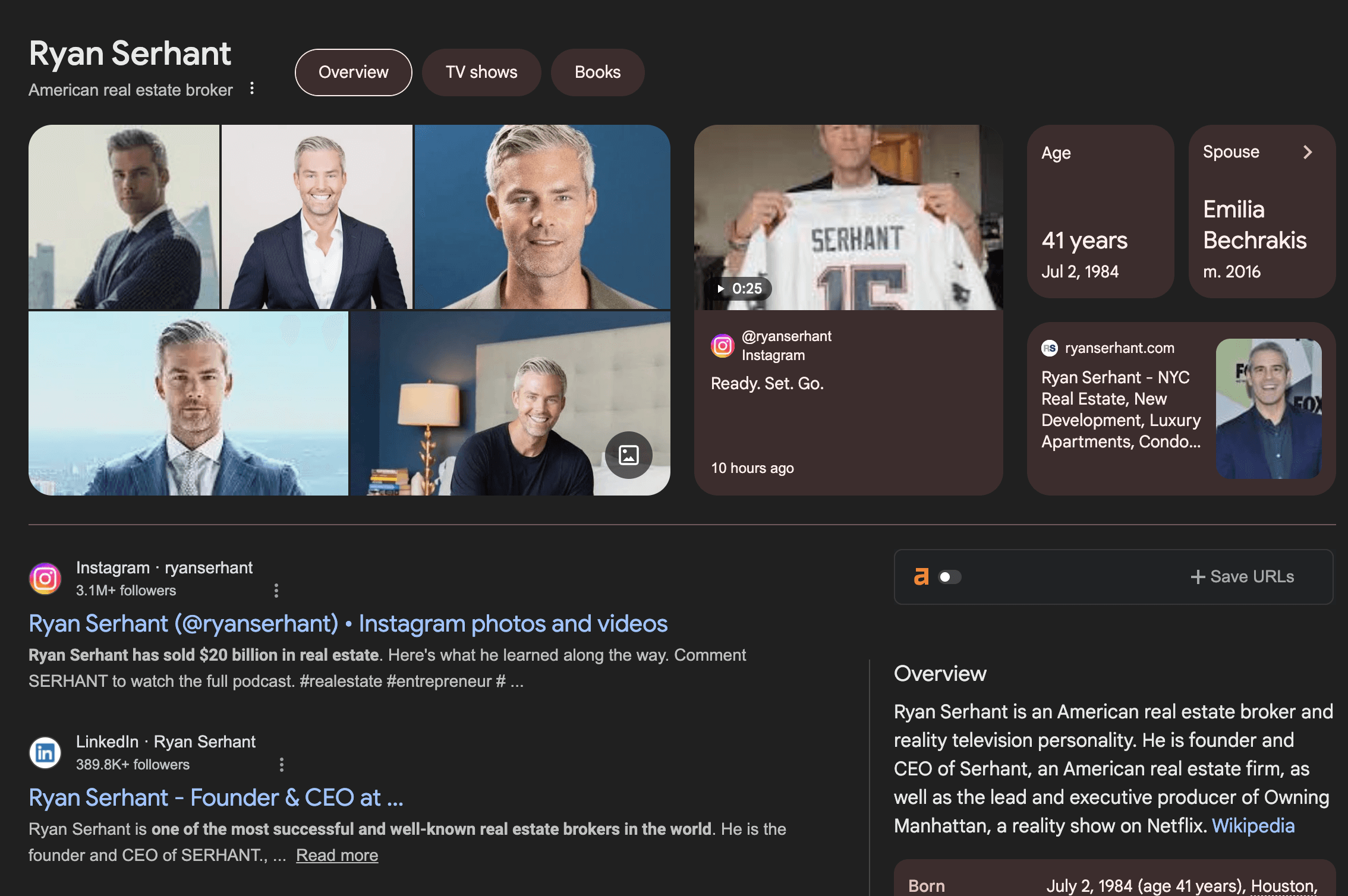
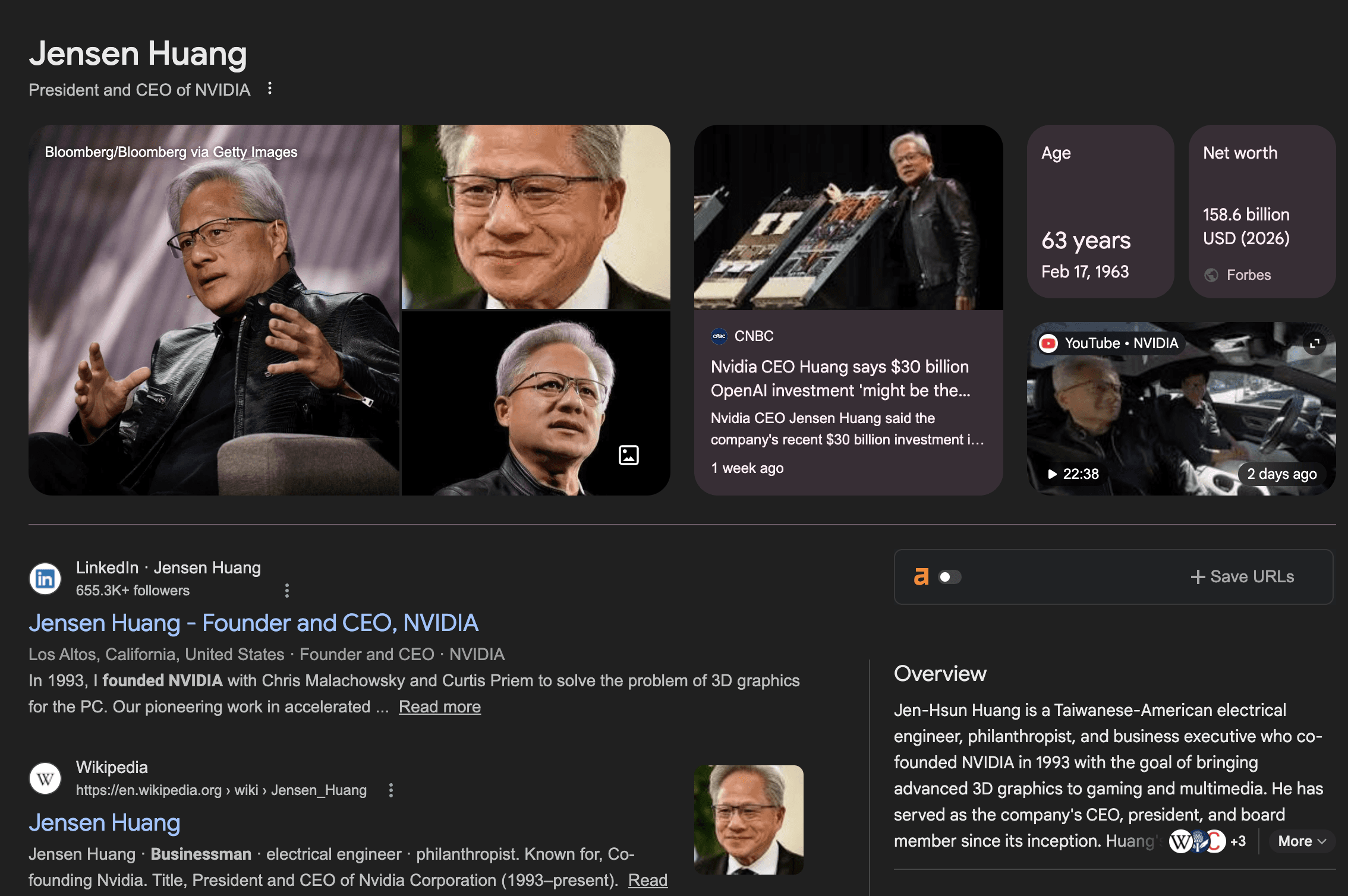
You've seen them. Google someone like Elon Musk, Oprah, or any well-known CEO, and a box appears on the right side of the search results. Photo, title, bio, credentials, affiliations. That's a Google Knowledge Panel. It's Google telling the world: this person is a verified, recognised entity.
Most people assume you need to be a celebrity to get one. That's wrong. The Knowledge Panel isn't a fame contest. It's a data problem. Google's Knowledge Graph is trying to understand who's who in the world, and your job is to make that understanding easy. If Google can confidently say "this person is a distinct, notable entity and here are the facts about them," you get a panel. If it can't, you don't.
So who actually qualifies? Let's break it down.
Google Doesn't Have a Published Eligibility Checklist
This is the first thing people get wrong. There's no form to fill out, no application, no minimum follower count. Google's Knowledge Graph operates on confidence. It crawls the web, reads structured and unstructured data, and decides whether there's enough consistent, corroborated information about you to justify creating an entity in its database. If the answer is yes, a panel appears. If the answer is not yet, nothing happens.
That said, after building 350+ panels across every type of client imaginable, the patterns are clear.
The Three Things Google Actually Cares About
1. Entity Clarity
Google needs to understand who you are as a distinct entity. Not just a name on a website, but a person with a defined role, affiliations, and credentials that are consistently described across multiple sources. If your name appears on your company website, a LinkedIn profile, a few media mentions, and a directory listing, but each one describes you differently or incompletely, Google has low confidence. If all of them say the same thing in the same way, confidence goes up.
This is why having an "entity home" matters. Your personal website or a dedicated bio page on your company site should clearly state who you are, what you do, and what you're associated with. It's the single authoritative source that Google uses as an anchor, and everything else corroborates it.
2. Corroborative Sources
Google doesn't take your word for it. It looks for independent, authoritative sources that confirm the facts about you. These include media coverage, press mentions, industry publications, university alumni pages, professional association listings, conference speaker bios, book publisher pages, podcast appearances, and similar third-party references.
The magic number isn't fixed, but the data is consistent: with a Wikipedia or Wikidata entry, you may need as few as 5-6 corroborating sources. Without either, you typically need around 20-30 relevant, authoritative sources that consistently confirm the same set of facts about you.
Note: these don't have to be front-page news features. A speaker bio on a conference website, a mention in an industry publication, a university alumni listing, a professional directory profile done right. These all count. What matters is that they're independent of you and consistent with each other.
3. Structured Data
This is the technical layer most people miss entirely. Google's Knowledge Graph runs on structured data, specifically schema markup in JSON-LD format. When your entity home and key web pages include proper Person or Organization schema that maps your name, title, employer, education, awards, and affiliations in a format Google can parse directly, you're speaking the Knowledge Graph's language.
Pages with proper schema markup are significantly more likely to be picked up by the Knowledge Graph than pages without it, even if the content is identical. This is doubly important now that Google's AI systems (including AI Overviews and AI Mode) rely heavily on structured data to generate answers about people.
Who Typically Qualifies
Based on what we've seen across 350+ engagements, these are the profiles that most commonly qualify for a Knowledge Panel:
Executives and founders. CEOs, managing partners, and founders of companies with an established online presence. You don't need to run a Fortune 500. If your company has a real website, you have media mentions or industry recognition, and there's enough corroborating data online, you likely qualify. The bar is lower than most people think.
Authors and speakers. If you've published a book (even self-published with proper distribution), spoken at industry conferences, or appeared on podcasts with their own web presence, you're building the kind of corroborative source network Google looks for.
Attorneys and professionals. Lawyers, doctors, and other licensed professionals often have extensive directory listings (Avvo, Martindale, Justia, Healthgrades, etc.) that create a baseline of corroborative sources. Combined with a firm website, bar association listings, and any media coverage, many professionals qualify without realising it.
Creators and personal brands. YouTubers, podcasters, and social media personalities with established audiences often have enough third-party coverage (interviews, features, collaborations) to build a qualifying entity profile.
Musicians, artists, and performers. If you're on Spotify, Apple Music, Discogs, IMDb, or similar platforms, these serve as strong corroborative sources alongside any press coverage.
Who Doesn't Qualify (Yet)
Not everyone is ready for a panel today. If you have minimal online presence, no third-party mentions, and no structured data anywhere, Google simply doesn't have enough to work with. That doesn't mean you'll never qualify. It means you need to build the foundation first.
The most common gaps we see:
No entity home. Your company website mentions you in passing, but there's no dedicated bio page with your full credentials.
Inconsistent information. Different sources list different titles, different company names, or different spellings of your name. Google sees noise, not signal.
No independent coverage. Every mention of you online is something you published yourself. Google wants third-party confirmation.
Name collisions. If your name is extremely common and Google can't distinguish you from other people with the same name, it needs stronger disambiguation signals.
These are all fixable. But they need to be fixed before the panel can trigger.
The AI Factor: Why This Matters More in 2026
Here's what's changed. In June 2025, Google removed over 3 billion low-quality entities from the Knowledge Graph to improve the accuracy of its AI systems. The entities that survived have strong, consistent signals across authoritative sources. The bar for what stays in the Knowledge Graph just went up.
At the same time, Google launched AI Mode, which generates conversational answers to search queries by pulling directly from the Knowledge Graph. ChatGPT, Gemini, and Perplexity do the same. When someone asks an AI tool about you, the answer it generates depends on whether you exist as a verified entity in the Knowledge Graph. No panel means no verified data. No verified data means AI is guessing, pulling from random directory listings, or saying nothing at all.
A Knowledge Panel is no longer just a trust signal on a search results page. It's the underlying data layer that determines how AI represents you to the world. If you're not in the Knowledge Graph now, you're invisible to the fastest-growing category of search.
Why DIY Almost Never Works
Everything above sounds logical on paper. In practice, the Knowledge Graph is unforgiving. One misconfigured schema markup, one inconsistent entity reference, one Wikidata entry that contradicts your website, and Google's confidence drops instead of rising. There's no error message. The panel just never appears, and you have no idea why. We've taken on dozens of clients who spent months trying to do this themselves before coming to us to clean up the damage and start over.
How to Know If You Qualify
Most people who come to us are closer than they think. But not everyone is ready today, and we don't take on clients we can't deliver for.
Before we work together, we run a detailed eligibility assessment. We look at how Google currently reads your name, what corroborative sources already exist, where the gaps are, and whether the foundation is strong enough to trigger a panel within our delivery window.
If you meet the following baseline, you're likely a fit:
You have an established professional identity. You're a founder, executive, attorney, author, creator, or public-facing professional with a real track record. You've been in your field for more than a year or two, and your name is associated with a company, firm, practice, or body of work that exists independently of social media.
You have some third-party presence online. You've been mentioned, quoted, featured, or listed somewhere that you didn't publish yourself. This could be media coverage, industry directories, conference bios, podcast features, alumni pages, professional association listings, or publisher pages. You don't need dozens. But you need some.
You have (or are willing to build) a clear entity home. A dedicated bio page on your company website or a personal site that clearly states who you are, what you do, and what you're affiliated with.
Your name isn't a ghost online. If someone Googles your full name and finds essentially nothing, or finds only social media profiles with no supporting context, the foundation likely isn't there yet. That can be built, but it's a separate conversation.
If you're reading this list and thinking "I check most of these boxes," you're probably right. If you're reading it and thinking "I'm not sure I have any of this," you many need some additional PR coverage and entity work before getting a panel.
What Happens Next
We offer a strategy call where we pull up your name, audit how Google currently reads your entity, and give you an honest assessment of where you stand. If we can deliver a panel, we'll tell you exactly what's involved and what the timeline looks like. If we can't, we'll tell you that too and explain what would need to change first.
If you're a founder, executive, or professional with an established presence and you want Google to reflect that, book a strategy call with Lindy Panels.
Abhay Jain
Founder and CEO
Abhay Jain is the Founder and CEO of Lindy GEO and Lindy Panels.
Most people build a following. Few build a name that outlasts them.
Claim the most valuable digital real estate on the internet and prove you’ve built something designed to stand the test of time.
Latest posts
Discover other pieces of writing in our blog